
Key Takeaways
- Organizational health in 2026 emphasizes data-driven assessment of both culture and leadership, reflecting hybrid work and emerging technologies.
- Measuring culture and leadership together offers a holistic view of effectiveness, but requires advanced tools and nuanced interpretation.
Organizational health is no longer a static concept. By 2026, evolving workplace dynamics, technological advances, and shifting leadership paradigms have led to sophisticated ways of measuring and enhancing culture and leadership. For leaders and professionals alike, understanding these trends is essential to navigating organizational complexity and fostering sustainable performance.
What Is Organizational Health in 2026?
Defining organizational health today
Organizational health describes an organization’s ability to align around a clear vision, execute effectively, and adapt to change—while maintaining an engaged, resilient workforce. In 2026, the definition expands to integrate agility, psychological safety, diversity, and a commitment to learning. It encompasses collaborative practices, transparent communication, and accountability at every level.
Key shifts since previous years
Recent years brought rapid transitions: digital transformation, remote work evolution, and a strong focus on employee wellbeing. By 2026, these factors have solidified into core pillars of organizational health. The focus has moved beyond operational outputs to include holistic engagement, emphasizing shared values, trust, and adaptability. Organizations now view health as central to retaining talent and sustaining growth in unpredictable markets.
How Is Organizational Culture Measured?
Qualitative and quantitative tools
Modern organizations use a blend of qualitative and quantitative approaches. Traditional tools like employee surveys, culture audits, and focus groups remain in use, but are now supplemented by real-time sentiment analysis, digital collaboration metrics, and 360-degree feedback platforms. Pulse surveys yield rapid insights, while structured interviews and open forums reveal nuanced perspectives around values and behaviors.
Emerging metrics and frameworks
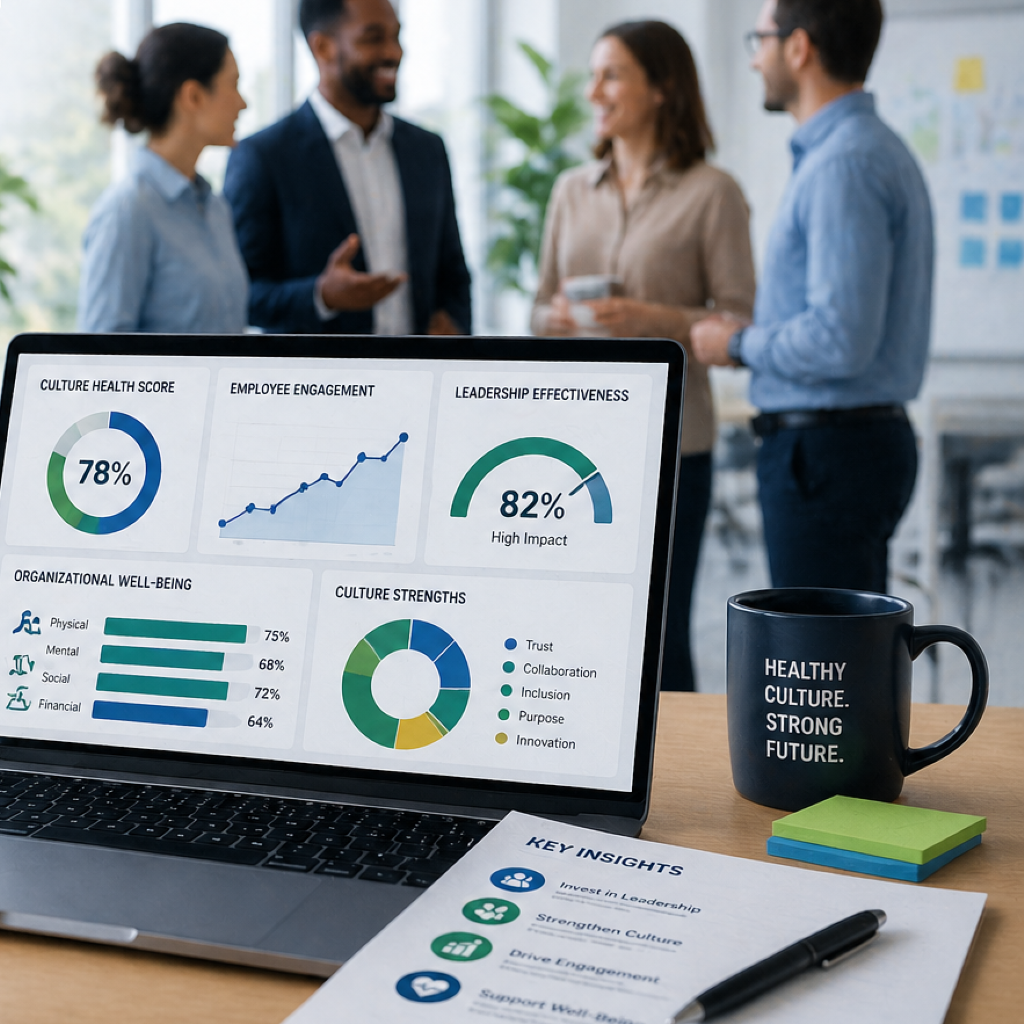
In 2026, data-driven culture diagnostics are prominent. Organizations employ advanced analytics to track cultural indicators such as trust, autonomy, and inclusion. Popular frameworks include the Organizational Health Index (OHI) and Culture Mapping, tailored with industry-specific benchmarks. Machine learning models now assist in detecting subtle shifts in engagement and alignment, using anonymized behavioral data from digital tools.
What Makes Leadership Impact Measurable?
Core factors influencing leader effectiveness
Leadership impact is measured by its influence on engagement, performance, and adaptability. Core factors include emotional intelligence, decision-making consistency, capacity to inspire, and ability to foster innovation. Leaders are also evaluated on feedback reception, promotion of psychological safety, and demonstration of ethical integrity across teams.
Ways to assess leadership within teams
Assessment combines ongoing feedback, leadership effectiveness surveys, and project outcome reviews. Peer reviews, stakeholder interviews, and role-specific KPIs contribute quantitative indicators, while qualitative insights surface in narrative feedback or reflective sessions. Increasingly, organizations turn to network analysis to understand a leader’s reach and influence within organic team dynamics, balancing these findings with structured evaluation frameworks.
Trends Shaping Organizational Health
Hybrid work and distributed teams
The normalization of hybrid models has reframed organizational health priorities. Leaders must now navigate distributed accountability, digital collaboration, and equitable experiences for both remote and on-site employees. Technology enables connectedness, but demands intentional practices that maintain clarity and cultural cohesion. Investments in flexible policies and wellbeing programs remain critical to supporting a varied workforce.
AI and data-driven culture diagnostics
Artificial intelligence has transformed the measurement landscape. AI-powered analytics process real-time behavioral signals, scanning for indicators of burnout, disengagement, or culture drift. Predictive models help organizations tailor interventions before issues escalate. AI tools also democratize feedback, allowing continuous, anonymous contributions from all levels and helping organizations rapidly identify trends and sentiments with precision.
Why Measure Culture and Leadership Together?
Interdependence of culture and leadership
Culture and leadership influence each other in a continuous cycle. Effective leaders shape values through behavior and decision-making, while the prevailing culture can either reinforce or undermine leadership intent. Measuring both together offers a holistic view—revealing not only what is happening within teams, but also why certain behaviors and outcomes persist.
Risks of isolated measurement
Assessing culture or leadership separately may produce an incomplete picture. For example, strong leadership may not translate to a healthy culture if organizational systems do not support it. Similarly, positive culture scores may mask underlying leadership deficiencies. Integrated measurement aligns strategy, reinforces accountability, and helps organizations address root causes rather than symptoms.
Challenges in Assessing Organizational Health
Balancing objectivity with complexity
Organizational health is nuanced, relying on both measurable outcomes and subjective experiences. Leaders face the challenge of selecting metrics that reflect core values while avoiding reductionism. There is growing emphasis on triangulating data—using multiple approaches to validate findings and prevent bias. Contextual understanding is vital, recognizing that even the strongest metrics must be interpreted within specific organizational realities.
Common barriers and limitations
Common obstacles include survey fatigue, data privacy concerns, and interpreting results with sufficient rigor. Disparate systems may lack integration, limiting the flow of actionable insights. Further, organizational change can create moving targets for measurement, emphasizing the need for agility in both data gathering and analysis methods. Transparent communication about purpose, outcomes, and data usage is essential to foster trust in the process.
What Lies Ahead for Business Leaders?
Evolving skillsets and leadership approaches
Leaders in 2026 are expected to broaden their capabilities, blending technical fluency with empathy, adaptability, and systems thinking. Cross-functional collaboration, digital literacy, and change management are increasingly essential. Coaching, mentoring, and inclusion-oriented leadership styles are gaining traction, reflecting the multidimensional nature of organizational health goals.
Fostering continuous organizational improvement
The most effective organizations treat health assessment as a dynamic process. Leaders foster environments that encourage feedback, innovation, and iterative improvement. Technology enables real-time monitoring, but sustainable change arises from cultivating openness, shared purpose, and a willingness to adapt. Continuous learning, supported by evidence-based practices and informed by both data and dialogue, is shaping the future of organizational health.

